
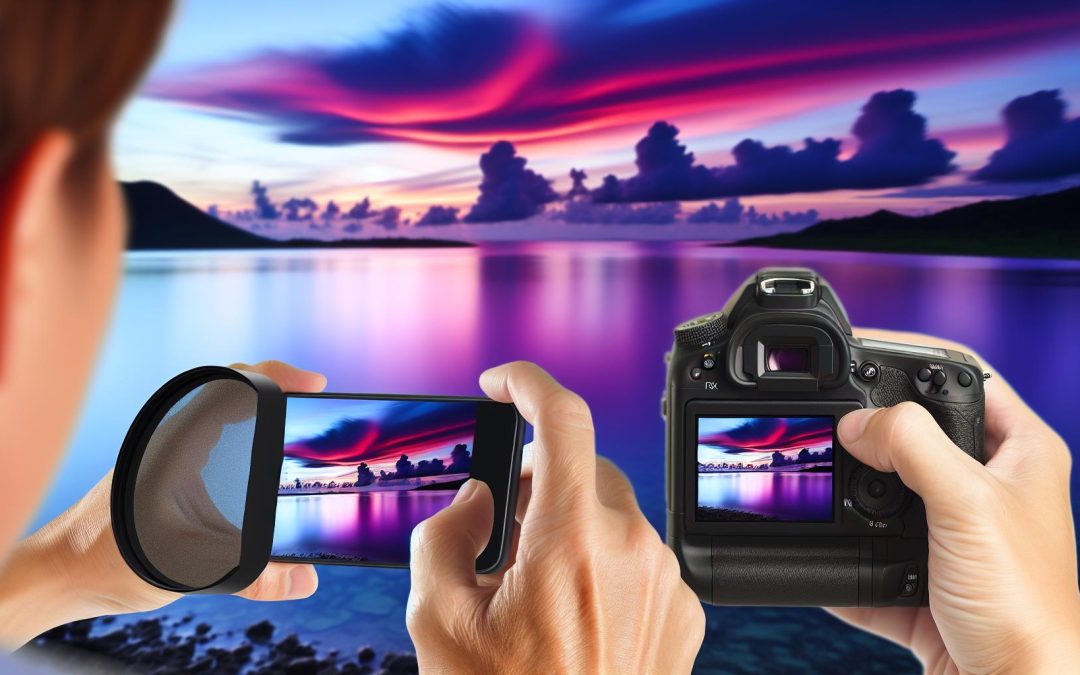
Dive into the world of ND filters for both phones and cameras. Uncover how they can transform your video and photo quality, offering unparalleled smoothness and clarity in diverse lighting conditions. Discover the benefits of leveraging cutting-edge photography trends and elevate your skills to new heights.
Understanding ND Filters
Neutral density (ND) filters are the magician’s wand in the realm of photography and video.
They control exposure, letting you whisper secrets to light and shadow. Imagine a sunlit beach, but your footage or photograph is washed out in bright glare. Achieving a smoother look, ND filters act like sunglasses, reducing light without affecting colour. They’re essential for controlling motion blur in video, transforming bustling streets into art without the harsh edges.
There are variable types, like the Tiffen Variable ND or the K&F Concept, offering diverse opacity levels. Yet, phones are weaving these charms too. Mobile accessory brands, like Moment, craft clip-on ND filters for smartphones, bridging the gap in capabilities.
They differ in application but share the same roots in essence. It’s the subtlety of shadows and highlights that can turn an ordinary shot into an evocative expression. Try experimenting with different levels to find your unique rhythm.
By dabbling with phone or camera ND filters, you can capture and promote photos that stand out effortlessly. Engage with the process, feel those minor tweaks that morph a bright day into a soft, inviting canvas. It’s a dance of elements, a whisper from the past whispering in your ear.
Choosing the Right ND Filter
Choosing the right ND filter is about finding the perfect balance for your shoot. It’s not just about high numbers or fancy brands, but the intricacies of filter ratings. The ratings, like ND4 or ND8, signify how much light your filter blocks, helping you manage those bright, glare-filled afternoons.
But, and this might seem a bit tedious, ensure compatibility. Whether you have a DSLR or a smartphone, like the new iPhone, filters must fit effortlessly. It’s small details like this that may save you a headache later.
For beginners, starting out might feel daunting. Try building a collection, beginning with versatile options that serve different lighting conditions. Slowly, without rushing, you may want to invest in higher quality ones as your skills improve.
Check out this guide for more insights. Quality doesn’t have to drain your wallet. Sometimes, a little patience and research reveal hidden gems that elevate your craft without hefty investments.
Setting Up for Smooth Video
Start by fitting your ND filter onto your lens. Getting this right sets the stage, you know? The filter must lock securely, no wobbles allowed. This will save headaches later.
Next, set your camera’s shutter speed. Here’s the trick: match it to double your frame rate. For 24fps, set to 1/48s. Needs adjusting? Maybe you do want to experiment a bit, but that formula’s a favourite for a reason.
Lower your ISO next. Keep it as low as possible to avoid noise. By doing this, your footage stays as crisp as a winter’s morning.
Speaking of crispness, bright days call for an ND filter’s magic. Stopping overexposure, perhaps preventing ghosting and lens flare. You don’t want ghosts haunting your footage for sure.
If things look a bit off – say, colours aren’t right – tweaking your white balance settings might help. It’s like sorting out a grumble before it becomes a full-blown argument.
You can check tips for shooting in low light without a flash to add more depth to your understanding. It’s a valuable nugget if lighting becomes problematic.
Experiment and see. Not every situation is textbook. You’ll get the feel of it as you go. And well, that’s actually kind of reassuring, isn’t it?
Capturing Stunning Photos
Using ND filters opens up a world of creativity. Let’s look at long exposures.
Capturing flowing water is magic. Streams turn into silky ribbons with the right filter. Take your trusty Hoya ND filter for instance, it helps create that dreamy water effect you see in professional shots. You’d think adding a filter might dull your images, but it’s exactly the opposite. Skies get dramatic, not dull.
It’s essential to check the exposure time. Time too long? You lose detail. And, cluttered compositions can kill the mood. Always question your filters. Is it helping or complicating your vision? Sometimes, less might actually be more.
If you’re experimenting with light filtration, you’ll see pitfalls. A too-dark filter, and your colours might struggle to pop. Yet, surprisingly, this tension often births intriguing results. Not always flawless, yet potentially compelling. For more ideas, why not explore some creative photography ideas to try at home?
Loose ends and all, that’s the beauty of it.
Integrating ND Filters With Mobile Photography
Neutral density filters can change how you approach mobile photography.
Let’s face it, smartphones bring along unique challenges. Smaller camera sensors struggle with overexposure, especially on sunny days, and that’s where ND filters come in. These tiny attachments work wonders, gently reducing the amount of light hitting your phone’s camera sensor without altering colour balance too much.
Finding the right attachments is key. Brands like Moment offer clip-on ND filters that fit various phone models smoothly. Paired with apps like ProCamera, you gain control over exposure settings, driving more creativity.
Sometimes, I feel a light breeze of nostalgia for the first time I tried this technique, remembering the sheer amazement at achieving smoother, more refined shots.
Start experimenting, and you’ll find a new dimension to your mobile photo game. For more on taking brilliant pictures with your phone, you might enjoy my guide on improving mobile photography.
Enhancing Your Skills and Getting Support
Constantly honing your ND filter techniques is essential.
Dive into the world of advanced photography by exploring dedicated tutorials and guides. They can be your secret weapon. Sites like these recommended photography books offer valuable insights, or even the latest gear like PolarPro QuartzLine filters for those precision shots. Stay informed by keeping one eye on emerging trends and the other on innovative technologies.
Perhaps you think you’ve nailed it. Yet, often a tweak, a new perspective, could elevate your work. Don’t hesitate to seek personalised guidance, sparking creativity and lighting your photographic path. Connect through this contact form for tailored advice. Together, art and technique can blend beautifully, turning your lens into a powerful storytelling tool.
Final words
ND filters are essential tools for achieving smooth video and stunning photos. By using them effectively, you can enhance your creativity and adapt to any lighting. Master these techniques to stay ahead in the evolving world of photography! Need personalized advice? Reach out to us today.