
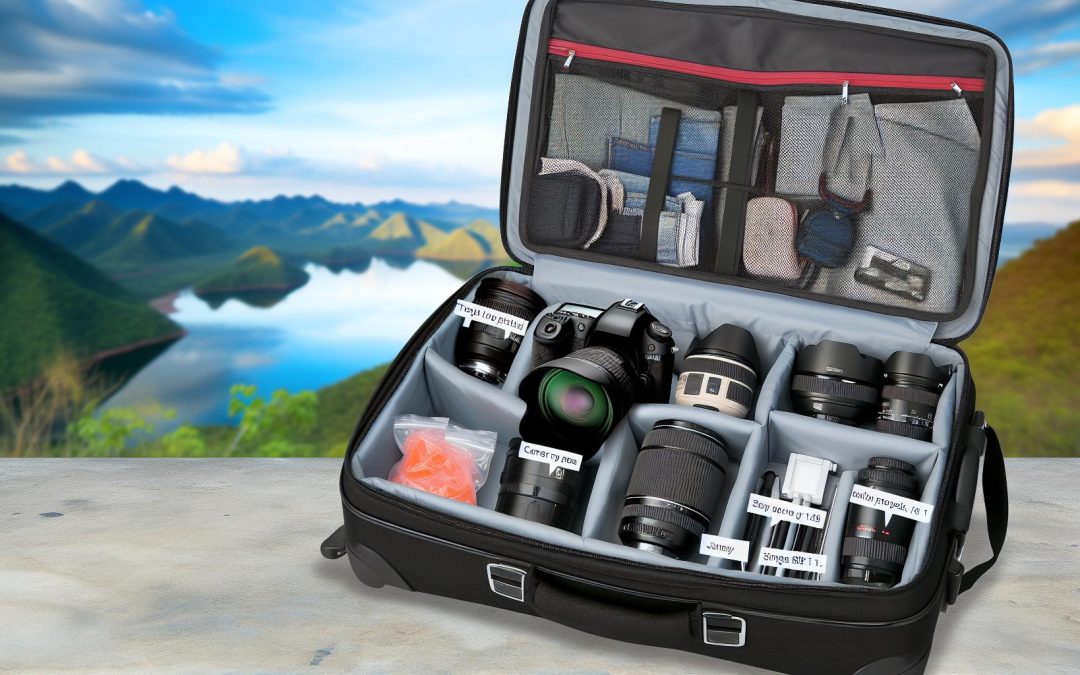
Packing for a travel photography trip in 2026 can be a breeze with this carry-on friendly guide. Discover essential gear and expert tips to leverage cutting-edge trends and equipment in the photography world, ensuring you’re prepared to capture stunning images without the bulk.
Essential Gear for Carry-On Travel
Lightweight gear makes travel photography a joy.
In 2026, why lug around a ton of kit when you can have your essentials packed in a carry-on? It seems like the whole universe of photography is shrinking, making room for innovation. The landscape of travel-friendly tech has altered dramatically, allowing photographers to capture stunning images without a full-frame setup that weighs you down.
First off, camera bodies. The Canon EOS R6 Mark II is a favourite for a reason—you get nearly everything a pro could dream of in a body that’s carry-on friendly. It’s compact enough but doesn’t skimp on features. But then again, isn’t there always that one brand that gets under your skin with its slight edge in user experience or feature set? Some might strike a balance elsewhere, leaning toward Sony’s A7C for its sheer size efficiency.
Let’s talk lenses next. Canon’s RF 24-70mm f/2.8 lens is simply dependable. Wide enough for landscapes or interiors in Istanbul, and zooms right in for that cheeky close-up of a street performer in Prague. Yet, there’s always the question, to prime or not to prime? The dilemma remains, especially if you’re trying to get artistic with a nice bokeh effect—oh, and if you’re into that, maybe this guide might spark interest.
Don’t forget a tripod. The Peak Design Travel Tripod folds down to the size of a bottle but stretches up full-grown, offering rock-solid stability with a breeze of setup. Quite the overachiever, yet it’s satisfying to witness.
Then there’s the interesting bit—new tech. Drones, for instance, are getting pocket-sized with impressive cameras, bringing out the aerial artist in anyone. The DJI Mini 3 Pro squeezes easily into a bag, and rules are friendlier now, which might nudge a few towards aerial shots they were hesitant about before.
Rounding up your gear, always factor in extra batteries and SD cards—travel’s unpredictable that way. You wouldn’t want to stumble upon the perfect scene only to be battery-dead, right?
In 2026, it’s really about making choices that harmonise with your needs and letting go of the idea that ‘bigger’ is ‘better’. As long as you’ve packed what you need and nothing more, your lens is one step closer to that perfect shot.
Maximizing Functionality in Limited Space
Packing for a photography trip is an art, no doubt about it.
Imagine fitting your professional world into a carry-on bag without sacrificing an essential piece of your kit. It’s possible, trust me. Let’s meander down this path together, first with bag selection. I remember once trying a backpack that resembled a small fortress, but alas, it was a fortress for clutter. Choose, instead, a bag with compartments tailored to your equipment. Brands like Peak Design offer bags designed with accessible compartments, so accessible you might actually forget what’s in there. This design not only speeds up your workflow but also gives every piece its own little home.
Protective gear, often underrated, can be the saviour of your fragile items. Lens caps and bubble wraps are your best friends. I once saw a photographer use socks, which seemed slightly quirky, but hey, it worked. On the subject of kits, let’s tackle prioritisation. Cameras, lenses, and perhaps a trusty compact tripod are your core items. But what about the filters, SD cards, or even a secondary camera body? Here’s where the location matters. Shooting amidst nature might require different gear than urban landscapes. Adapt your kit based on where your adventure leads you.
New travel regulations can throw a spanner in the works. Size limits, weight restrictions, it feels like they want us to leave half our stuff at home. Be aware of the rules and pack light but clever. I remember a friend once had to leave a prized lens behind because of a few extra grams. Don’t risk it, check the airline’s latest carry-on policies.
Efficient packing is half science, half feeling. Some swear by packing cubes for organisation, others just trust the system of layered chaos. Find what resonates with you, which might feel hazy at times. But remember, it’s about being nimble, enabling you to adapt rather than encumber. Speaking of adaptation, for some fresh insights you might want to check out how photographers market their business responsibly. It might just spark an idea or two.
In essence, make each piece count. Your bag’s space is precious, make it work for you. It’s not just about fitting in gear, it’s about fitting in gear that speaks.
Latest Trends and Techniques
Change is the only constant, especially in travel photography.
Imagine standing at the intersection of creativity and technology, with tools in hand that almost seem futuristic. Today’s cameras, augmented by AI, can transform how we work. Take the Canon EOS R6 Mark II, for instance – a powerhouse that blends art with science. It offers more than just photography; it offers a whole new way to see the world.
Yet, the latest tech isn’t just about cameras. Drones have opened up vistas once impossible to capture from the ground. They’re no longer just toys for enthusiasts. In 2026, licensed drones turn your travelogue into a thrilling aerial adventure. Think of them as your eyes in the sky, offering angles that once took hot air balloons or helicopter rides to achieve.
Now, let’s talk about those editing suites, like Adobe Lightroom. They’ve evolved, catching nuances our eyes might miss and making post-processing less of a chore. Software like Luminar Neo employs AI to tweak subtle details with precision we couldn’t imagine two decades ago. It’s our digital darkroom, but with capabilities that even old-school photographers may find intimidating.
But wait, what does all this mean for us as photographers? Does it imply that the art is in the settings and software? Not necessarily. It means that learning and adaptability are key. Each day, the game changes. New techniques appearing on the horizon should be welcomed as challenges rather than obstacles. Like an ever-revolving puzzle, continually piecing together requires both savvy and patience.
Perhaps you feel overwhelmed. That’s understandable. But embracing the unknown, however unpredictable it may be, can exponentially expand your skill set. It’s like being your own mentor, ever curious and open to unexpected paths. Dive into workshops, join online communities, and feed your passion with discussions and tutorials.
To keep pioneering these thrilling waters, stay informed. For more personalised guidance, visit “Photography trends to watch this year” to discover pathways that align with your travel photography ambitions. Embrace the journey of learning as much as the journey you’re capturing.
Final words
Travel photography in 2026 is all about smart packing and innovative gear. By maximizing your carry-on efficiently, you will enhance your photography adventures. Stay updated with new trends and techniques to capture stunning images effortlessly.