
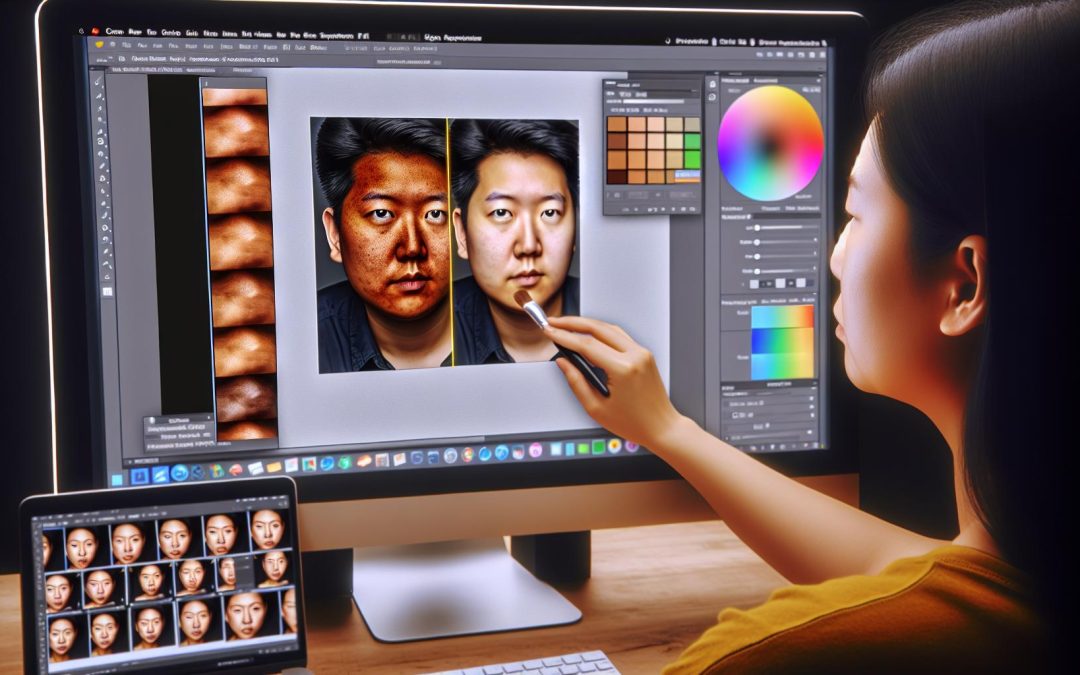
Understanding when to use frequency separation versus AI skin retouching is essential for any photographer aiming to achieve stunning portrait results. Exploring these techniques can significantly enhance your editing workflow and output.
Understanding Frequency Separation
Frequency separation is a powerful technique in portrait editing. It’s all about separating fine details from colours during the editing process.
Imagine you’re touching up a photo where the skin just doesn’t pop. By isolating details like pores and wrinkles on one layer and blending skin tones on another, you can fine-tune textures without affecting the overall colour. It’s like giving your images a mini spa treatment, just a bit of extra polish where needed. Though it seems subtle, this approach allows for nuanced adjustments that maintain the natural essence of the subject.
Frequency separation is most effective when you need precise control. For example, if you’re editing a model’s close-up in a fashion shoot, it can be invaluable.
While it gives you control, it’s not rapid. When time is not on your side, AI skin retouching might be more your style. But, in situations where every pixel counts, frequency separation remains a trusted friend.
For related techniques, see this guide on using depth of field creatively.
AI Skin Retouching Demystified
AI skin retouching is a game-changer in portrait editing.
It operates by using advanced algorithms to detect and smooth skin tones while preserving essential details. Speed and accuracy are its middle names, doing away with tiresome manual touch-ups. Tools like PortraitPro and Retouch4Me exemplify how AI can streamline workflows. You could spend ages getting that perfect skin glow manually. Or maybe you just want those fiddly bits sorted in a snap. That’s where AI comes in.
But let’s not get ahead of ourselves. Sometimes, traditional hands-on techniques have their place. Yet, for freelance photographers needing efficiency, AI often feels like a breeze. For more on this topic, check out this handy guide on marketing a photography business.
When to Use Frequency Separation
Frequency separation is your go-to technique for detailed precision, especially when the texture of an image is crucial.
Imagine you’re fine-tuning a portrait where every pore, every subtle hue shift, matters. This method gives you the power to tackle complex texture and colour correction separately, hence offering a depth of control that’s unmatched by AI. Think of it like painting with a fine brush, where the tiniest nuances can be highlighted or softened according to your artistic vision.
In genres such as beauty and fashion photography, mastering frequency separation can elevate your work. Bringing that beautiful blend of sharp textures and balanced tones, you maintain a touch that sets your artistry apart.
Perfect this skill, and stay ahead in the industry. Got the itch to master this? Start today.
Pros and Cons of AI Skin Retouching
AI skin retouching is fast and convenient.
In just a few clicks, you can achieve smooth skin. Tools like Lightroom AI masking do the heavy lifting. Time saved is a huge plus, especially for those on tight deadlines. But let’s chat quality. Sometimes, AI lacks a human’s touch. Faces often seem uniform, losing individual character. It’s like looking through a filter, not a lens.
Then there’s cost. AI programs often come with recurring fees. Perhaps they might sap more from your budget than manual techniques. But I think the true conundrum surfaces with artistic uniqueness. Maintaining a personalised touch isn’t straightforward here. Is speed worth losing creativity? Maybe, maybe not.
Perhaps, a compromise lies in pairing AI with manual tweaks. You get speed but retain that artistic soul. Explore these tools, yet never dismiss the value of human intervention.
Enhancing Your Skills with Both Techniques
Mastering both frequency separation and AI skin retouching can elevate your editing game.
Imagine layering frequency separation to define textures, while AI retouching smooths flaws. You control the narrative of each shot. For instance, focus on frequency separation’s detail enhancement for bridal shoots, letting every lace detail pop. Weddings are personal journeys, right? Layer in AI retouching to polish skin when guests deserve flawless memories too.
It’s part art, part science. Experiment with blends for varied projects like fashion and portrait captures. How you apply these techniques depends on the story you’re telling. Embrace subtlety, when overprocessed looks aren’t your goal.
Visit behind-the-scenes tips for more insights. For guidance, contact Alex Smale.
Final words
By understanding the strengths of frequency separation and AI skin retouching, photographers can elevate their editing arsenal and craft visually stunning portraits. Leverage these techniques to stay competitive and create captivating images. Ready to transform your portrait editing skills? Contact us [here](https://www.alexsmale.co.uk/contact/).